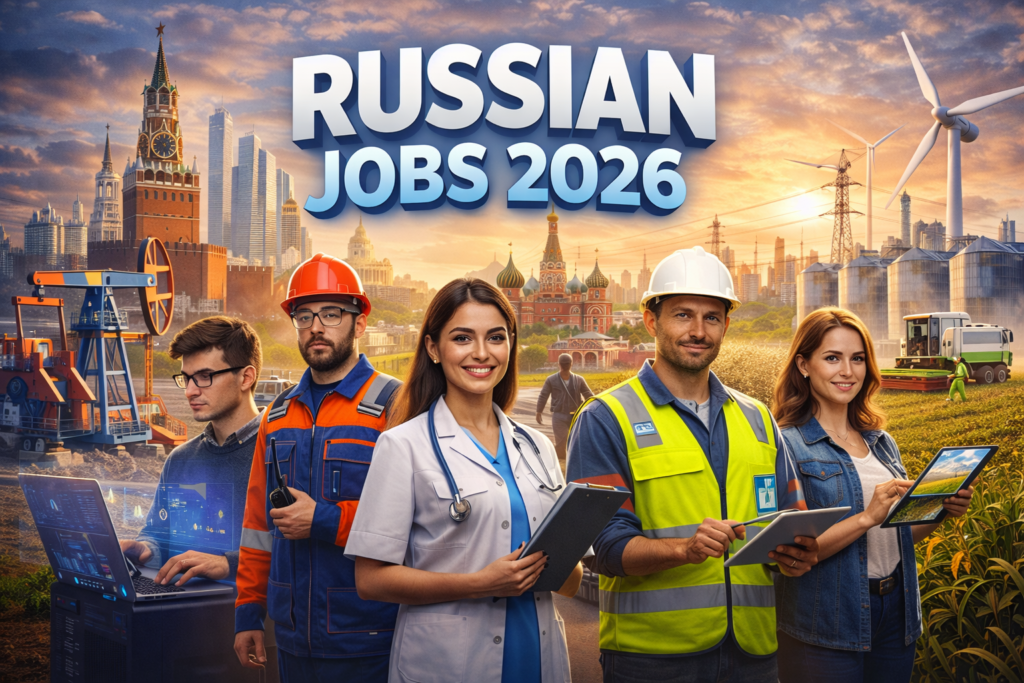
By 2026, the Russian job market is expected to reflect a mix of economic adaptation, technological growth, and sector-specific expansion. Despite global challenges and shifting international dynamics, Russia continues to develop internal industries and strengthen domestic employment opportunities. For job seekers, professionals, and students, Russian jobs in 2026 will offer a wide range of options across traditional sectors and modern, skill-driven fields.
One of the most important areas for Russian jobs 2026 is the technology and IT sector. Russia has a strong base of software developers, engineers, and cybersecurity specialists, and this trend is expected to grow further. Jobs related to artificial intelligence, automation, data analysis, and system security are becoming essential for both private companies and government-supported projects. Many tech roles now prioritize practical skills and project experience over formal degrees, making the sector attractive to young professionals.
The energy and natural resources sector will continue to play a central role in Russia’s economy. Oil, gas, mining, and energy infrastructure jobs are expected to remain stable in 2026. However, there is also a gradual shift toward modernization, creating demand for technical operators, safety managers, environmental specialists, and digital monitoring experts. These roles combine traditional industry knowledge with modern technology, offering long-term career stability.
Another growing employment area is manufacturing and industrial production. Russia is investing in local manufacturing to reduce dependence on imports. As a result, factory workers, machine operators, quality controllers, logistics staff, and maintenance technicians will be in demand. Many of these jobs provide on-the-job training, making them suitable for individuals without extensive prior experience.
The agriculture and food processing sector is also expected to expand by 2026. Russia’s large agricultural base supports jobs in farming technology, food packaging, storage management, transportation, and export coordination. Modern agricultural practices are creating new roles that combine manual work with basic technical skills, increasing productivity and employment opportunities in rural and semi-urban areas.
In addition, healthcare and social services will remain important sources of employment. With population changes and increasing healthcare needs, jobs such as nurses, medical assistants, lab technicians, caregivers, and administrative staff will continue to grow. Many healthcare-related roles offer structured training programs, allowing new workers to enter the field with limited experience.
The service and retail sector also contributes significantly to Russian jobs in 2026. Supermarkets, delivery services, customer support centers, hospitality businesses, and local service providers regularly hire workers for flexible and entry-level roles. These jobs are particularly suitable for students, part-time workers, and individuals seeking quick employment.
In conclusion, Russian jobs 2026 present a balanced mix of traditional industries and modern career paths. From technology and energy to healthcare and services, the job market offers opportunities for people with different skill levels and backgrounds. Those who focus on learning practical skills, adapting to new technologies, and staying consistent will be well-positioned to succeed in Russia’s evolving employment landscape.
